
What Does 1/4-20 Mean?
Updated November 23, 2026
1/4-20 means a bolt or screw with a 1/4-inch (0.250") diameter and 20 threads per inch. The first number is the major diameter in inches; the second is how many threads you would count along one inch of the shank. It is the coarse-thread (UNC) version of the 1/4" size, so the full callout is 1/4-20 UNC, and each thread sits 1/20" (0.050") from the next.
You will see it written several ways — 1/4-20, 1/4"-20, ¼-20, 1/4 x 20, or spoken as "quarter-twenty" — and they all mean the same thread. A 1/4-20 bolt only fits a 1/4-20 nut or tapped hole: change either number and the threads will not engage.
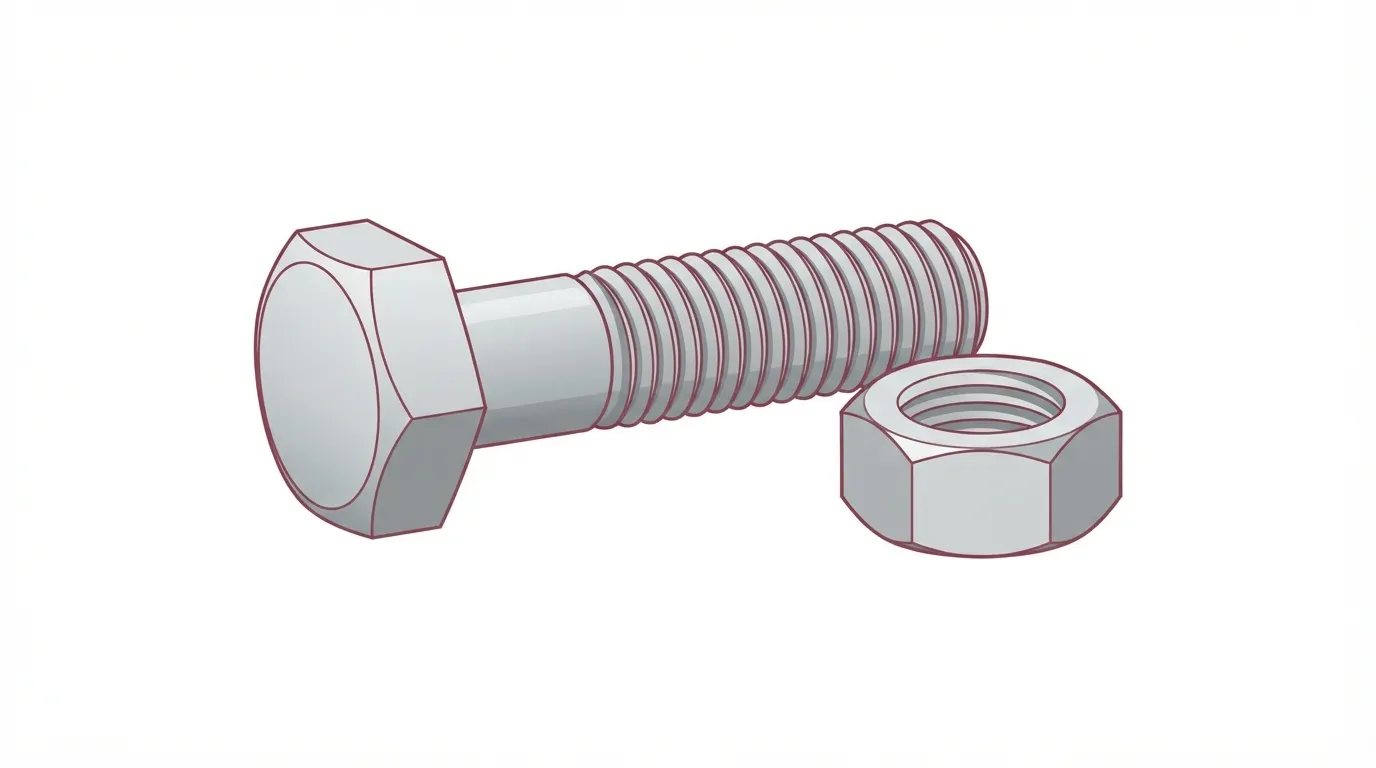
1/4-20 at a glance
- Nominal (major) diameter
- 1/4" = 0.250" (6.35 mm)
- Threads per inch (TPI)
- 20
- Pitch (crest to crest)
- 1/20" = 0.050" (1.27 mm)
- Thread series
- UNC — Unified National Coarse
- Fine-thread version
- 1/4-28 UNF
- Tap drill (about 75% thread)
- #7 (0.201")
- Clearance hole, close fit
- F drill (0.257")
- Clearance hole, normal fit
- H drill (0.266")
- Tensile stress area
- 0.0318 sq. in.
- Hex bolt / hex nut wrench
- 7/16"
- Socket head cap screw hex key
- 3/16"
- Nearest metric size
- M6 x 1.0 (not interchangeable)
What do the 1/4 and the 20 stand for?
1/4 is the major diameter — the width measured across the outside of the threads, from crest to crest. For 1/4-20 that is 0.250 inch, or 6.35 mm. Real bolts run a hair under the nominal size so they thread in freely: a standard class 2A 1/4-20 bolt measures between about 0.241" and 0.249" across the threads.
20 is the thread count, in threads per inch (TPI). Lay a ruler along the shank and you will count 20 crests in one inch. The distance from one crest to the next is the pitch: 1 ÷ 20 = 0.050 inch. Inch threads are called out by TPI; metric threads are called out by pitch in millimeters instead (M6 x 1.0 means 1.0 mm per thread).
The dash is only a separator. 1/4-20 is not a subtraction, a fraction raised to the 20th power, or 1/4 times 20 — it is read "one-quarter, twenty."
How to read a full 1/4-20 callout
On a drawing or a spec sheet the size is often followed by more information. A typical bolt callout looks like 1/4-20 UNC-2A x 1":
- 1/4 — major diameter, inches
- 20 — threads per inch
- UNC — Unified National Coarse thread series
- 2A — thread class and type: 2 is the standard fit for commercial fasteners, A means an external thread (bolt or screw), B an internal one (nut or tapped hole)
- x 1" — length; on most heads it is measured from under the head to the tip
Our guide to reading bolt specifications covers the material, grade and finish fields that come after the size, and how to measure bolts and screws shows where length is measured on each head style.
Is 1/4-20 coarse or fine thread?
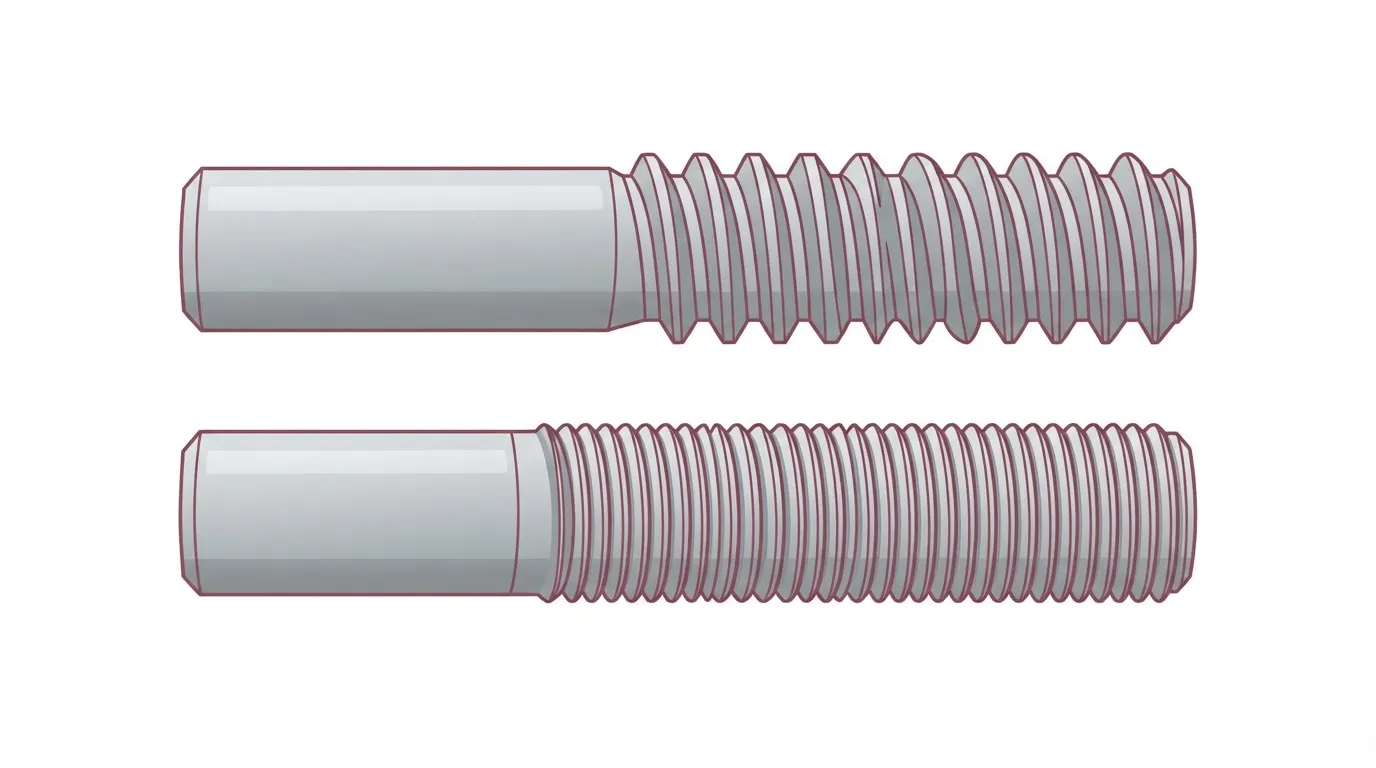
1/4-20 is coarse thread (UNC). Every inch diameter has a coarse and a fine thread, and some have an extra-fine one. Coarse is the default: it starts faster, tolerates dings and dirt, and is less likely to cross-thread or gall in stainless steel. Fine thread has a slightly larger stress area, so it is a little stronger in tension, and its shallower helix allows finer adjustment.
| Size | Series | TPI | Pitch | Tap drill | Stress area (sq. in.) |
|---|---|---|---|---|---|
| 1/4-20 | UNC (coarse) | 20 | 0.050" | #7 (0.201") | 0.0318 |
| 1/4-28 | UNF (fine) | 28 | 0.0357" | #3 (0.213") | 0.0364 |
| 1/4-32 | UNEF (extra fine) | 32 | 0.03125" | 7/32" (0.219") | 0.0379 |
Use 1/4-20 unless a drawing, an existing tapped hole or a thin-wall part calls for fine thread. The trade-offs are covered in coarse vs. fine thread (UNC vs. UNF).
1/4-20 vs. 10-24, 5/16-18 and M6
The sizes on either side of 1/4-20 are easy to mix up, especially M6, which is only about 0.35 mm smaller. None of these thread into each other.
| Size | Major diameter | Threads per inch | Notes |
|---|---|---|---|
| #10-24 | 0.190" (4.83 mm) | 24 | Smaller. The most common size just under 1/4-20. |
| M6 x 1.0 | 0.236" (6.00 mm) | 25.4 (1.0 mm pitch) | Closest metric size. Slightly smaller and finer — will not thread into 1/4-20. |
| 1/4-20 | 0.250" (6.35 mm) | 20 | Coarse thread, the default 1/4" size. |
| 1/4-28 | 0.250" (6.35 mm) | 28 | Same diameter, fine thread. Will not mate with 1/4-20. |
| 5/16-18 | 0.3125" (7.94 mm) | 18 | Next coarse size up. |
10-24 vs. 1/4-20: a #10 screw is 0.190", so it is visibly thinner and drops straight through a 1/4-20 nut. M6 vs. 1/4-20: an M6 bolt can start into a 1/4-20 nut and then bind within a turn or two because the thread spacing drifts apart. If a bolt starts and then tightens up early, suspect a metric/inch mix before you reach for a bigger wrench.
Hole sizes for 1/4-20: tap drill and clearance
- Tapping a 1/4-20 thread: drill with a #7 bit (0.201"), which leaves about 75% thread engagement — the usual choice for steel and stainless. A 13/64" bit (0.203") is the nearest fractional size.
- Bolt passes through without threading (close fit): F drill (0.257") for accurate location.
- Bolt passes through (normal fit): H drill (0.266"), or 17/64" (0.266"), when parts need a little room to line up.
Tap drills for every other inch and metric size are in the thread pitch chart.
What wrench or hex key fits 1/4-20?
The tool depends on the head style, not on the thread:
| 1/4-20 fastener | Tool size |
|---|---|
| Hex bolt / hex cap screw | 7/16" wrench or socket |
| Hex nut (finished) | 7/16" wrench or socket |
| Socket head cap screw | 3/16" hex key |
| Button head socket cap screw | 5/32" hex key |
| Flat head socket cap screw | 5/32" hex key |
| Socket set screw | 1/8" hex key |
Head and wrench sizes for the larger diameters are in the bolt size chart.
How to tell if a bolt is 1/4-20
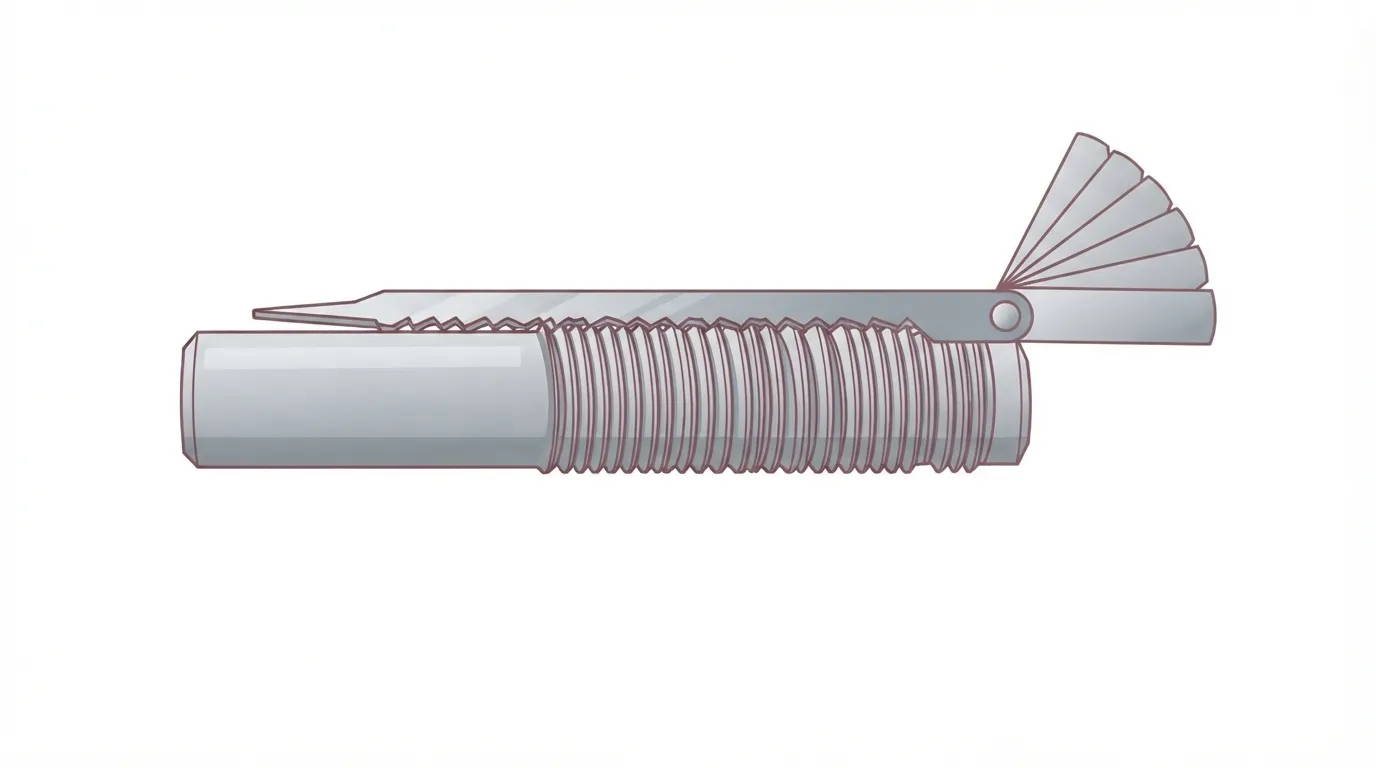
- Measure the diameter across the threads with a caliper. A reading of roughly 0.24"–0.25" is a 1/4" bolt; about 0.23"–0.236" is more likely M6; about 0.19" is #10.
- Check the thread count with a thread pitch gauge: the 20 TPI blade sits flat in the threads with no rocking. No gauge? Count crests over 1/2" of shank — 10 crests means 20 TPI, 14 means 28 TPI.
- Test with a known nut. A 1/4-20 nut spins on by hand all the way. If it stops after a turn or two, the bolt is a different pitch.
Where 1/4-20 is used
1/4-20 is one of the most common inch thread sizes. You will find it in machinery guards and brackets, equipment panels, furniture and shelving hardware, threaded inserts, and electrical and HVAC mounting. It is also the standard camera and tripod mounting thread (ISO 1222), which is why the same screw size turns up on light stands, monitor arms and camera mounts.
Frequently asked questions
In the thread callout 1/4-20, what does the 20 stand for?
The 20 is the thread count: 20 threads per inch (TPI). If you count the thread crests along one inch of the bolt you will find 20, so each crest is 1/20 inch (0.050 inch) from the next. The 1/4 is the major diameter in inches.
Is 1/4-20 coarse or fine thread?
1/4-20 is coarse thread. It is the UNC (Unified National Coarse) size for a 1/4-inch diameter. The fine-thread version is 1/4-28 UNF and the extra-fine version is 1/4-32 UNEF.
What is the diameter of a 1/4-20 bolt?
The nominal diameter is 1/4 inch, which is 0.250 inch or 6.35 mm. Measured across the threads with a caliper, a standard class 2A bolt reads slightly under that, between about 0.241 and 0.249 inch.
What size drill bit do I use to tap a 1/4-20 hole?
Use a #7 drill (0.201 inch) for about 75% thread engagement. For a hole the bolt passes through without threading, use an F drill (0.257 inch) for a close fit or an H drill (0.266 inch) for a normal fit.
What wrench size fits a 1/4-20 bolt?
A 1/4-20 hex bolt or hex nut takes a 7/16-inch wrench or socket. A 1/4-20 socket head cap screw takes a 3/16-inch hex key.
Is 1/4-20 the same as M6?
No. M6 x 1.0 is 6.00 mm in diameter with a 1.0 mm pitch, which is about 25.4 threads per inch. 1/4-20 is 6.35 mm with 20 threads per inch. They are close in size but will not thread together, and forcing one into the other damages both.
Will a 1/4-20 bolt fit a 1/4-28 nut?
No. Both are 1/4 inch in diameter, but the thread spacing differs (20 versus 28 threads per inch), so the threads will not engage. Match both numbers when you buy a nut.
Does 1/4-20 mean 1/4 to the 20th power or 1/4 times 20?
Neither. The dash in 1/4-20 is a separator, not a minus sign, an exponent or a multiplication. It reads as "one-quarter twenty": a 1/4-inch diameter with 20 threads per inch.
Shop 1/4-20 fasteners
Each link opens the category already filtered to 1/4-20. Always match a 1/4-20 bolt with a 1/4-20 nut.